


Consistent cooling and temperature control from Akita
Generally, brown rice should be stored at temperatures below 15 degrees.
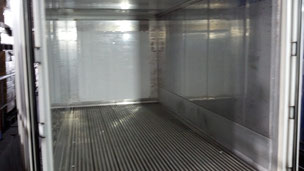
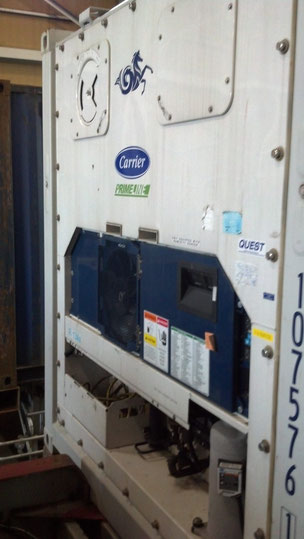
When importing brown rice from Akita Port, we use reefer (refrigerated) containers at 15 degrees. The rice arrives in Singapore after approximately three weeks, maintaining the same quality as in Japan.
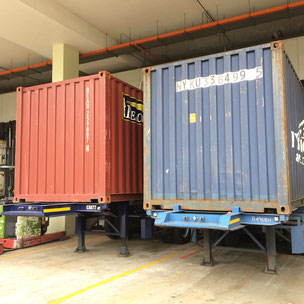
On the other hand, the Japanese rice and Japanese varieties found in supermarkets in Singapore are old rice milled in Japan, and most of it is imported in dry containers whose internal temperatures reach over 60 degrees.
This is because transportation costs are three times cheaper if you charter a container, and eight times cheaper if you use consolidated cargo.
In the summer, rice is delivered from Japan at this temperature for 2-3 weeks at a time. The main reason why Japanese and other rice eaten abroad, not just in Singapore, tastes bad is due to this careless temperature control in order to keep costs down.
In order to produce cheap products, the most important quality of Japanese rice is sacrificed. This is especially true for white rice, which does not show any change in appearance. As a rice shop owner who loves rice and was born and raised in Akita Prefecture, this transportation method pains me.
By the way, brown rice is weak to long-term high temperatures, so it will quickly rot if stored in a dry container.
Now, the temperature control range of 15 degrees is for long-term storage of more than one year.
Brown rice is a plant that still has its germ intact, and it is this germ that breathes. In other words, it uses oxygen to oxidize and deteriorate, but when the temperature drops below 15 degrees, brown rice goes into complete hibernation and no longer uses oxygen.
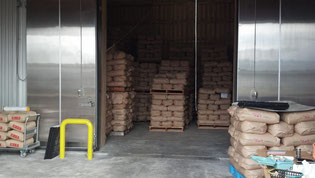
The storage temperature in Japan is 15 degrees, but in our warehouse in Singapore, it is kept at 18 degrees.
This is because the rice is imported in quantities that will be sold out within 3-4 months, so there is almost no deterioration of the brown rice if the temperature is below 20°C.
Furthermore, if the temperature in the warehouse differs too much from the temperature at the time of milling, the difference will cause moisture to adhere to the milled rice, which will affect the taste of the rice. In other words, if storing at 15 degrees, it will be necessary to raise the temperature of the brown rice by leaving it at room temperature for about 24 hours.
If that happens, it will no longer be possible to polish rice in a timely manner, as soon as an order is placed.
Therefore, if the rice is to be taken out of the warehouse frequently and stored with the assumption that it will be milled and shipped immediately, we have determined that 18°C is best for our small refrigerated warehouse.